

ABS Pipe
ABS (Acrylonitrile Butadiene Styrene) pipes are widely used in both domestic and commercial applications, particularly for pipeline connections, drainage, and fluid handling systems. They are valued for being lightweight, durable, and impact resistant, making them suitable for a wide range of industries.
A key component often associated with some plastics is Bisphenol A (BPA), which is used to harden certain types of plastic materials, including those found in food and water containers. While there is currently no conclusive evidence that BPA poses significant health risks to humans, some animal studies have suggested potential hormonal, neurological, and cardiovascular effects. Due to these concerns, global health authorities and regulatory bodies have revised and updated BPA usage guidelines in recent years to ensure consumer safety.
ABS Pipe
- Lightweight: Easy to transport, handle, and install
- High Strength: Excellent tensile and impact resistance
- Corrosion Resistant: No rusting, scaling, or degradation in water and chemical environments
- Smooth Bore: Low friction loss for improved flow efficiency
- Wide Temperature Range: Reliable performance from -40°C to +70°C
- Chemical Resistant: Withstands most dilute acids, alkalis, and salts
- UV Stable (when specified): Suitable for outdoor installations
- Non-Toxic: Safe for potable water (when certified)
- Versatile Joining Options: Solvent cement welding, threaded ends, or mechanical fittings
- Durable: Long service life with minimal maintenance requirements
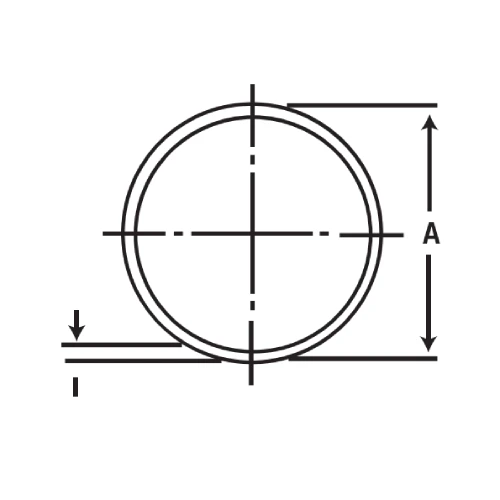
Technical Details of ABS Pipe
| Category | Specification |
|---|---|
| Material | Acrylonitrile Butadiene Styrene (ABS) plastic |
| Standards | ASTM D3965, ASTM D2661, BS 5391, ISO 15493 (regional compliance) |
| Size Range | ½" to 12" (20 mm to 315 mm) |
| Pressure Rating | PN 10 – PN 15 (up to ~150 PSI at 20°C) |
| Temperature Range | -40°C to +70°C (continuous service) |
| Color | Grey or Black |
| Joining Methods | Solvent cement welding, threaded ends, or mechanical couplings |
| Density | ~1.05 g/cm³ |
| Tensile Strength | ~45 MPa |
| Impact Resistance | High, even at low temperatures |
| Chemical Resistance | Resistant to dilute acids, alkalis, salts; not suitable for strong solvents or hydrocarbons |
| Pipe Diameter (D) | A | t (min) |
|---|---|---|
| 3/8 | 0.675 | 0.070 |
| 1/2 | 0.84 | 0.088 |
| 3/4 | 1.05 | 0.100 |
| 1 | 1.315 | 0.125 |
| 1-1/4 | 1.66 | 0.157 |
| 1-1/2 | 1.90 | 0.180 |
| 2 | 2.375 | 0.225 |
| 3 | 3.50 | 0.331 |
| 4 | 4.50 | 0.426 |
-
Pipe Diameter (D) → Nominal Pipe Diameter
-
A → Outside Diameter (OD)
-
t (min) → Minimum Wall Thickness

Customization & Processing Options
Customizations Option Available for ABS Pipe
At Petron Thermoplast, we offer customized PVDF fittings to meet your specific system requirements.
Customization options include:
- Tailor-made dimensions and wall thicknesses
- Custom-molded and machined PVDF fittings
- Pre-fabricated manifolds and assemblies
- Choice of connection type (butt fusion, socket fusion, or flanged)
- OEM branding or marking options